A File Controller is a service that performs all file Input/Output operations.
The Windows account used to start a File Controller service must be an account with access to all
directories on all servers where files will be read and written. This includes Extract, Print, Log,
Image, Listbox, and the Form Help files.
Navigate in the Control Center to System Configuration →
Services and select the File services tab.
Select the Add button to add a new File Controller.
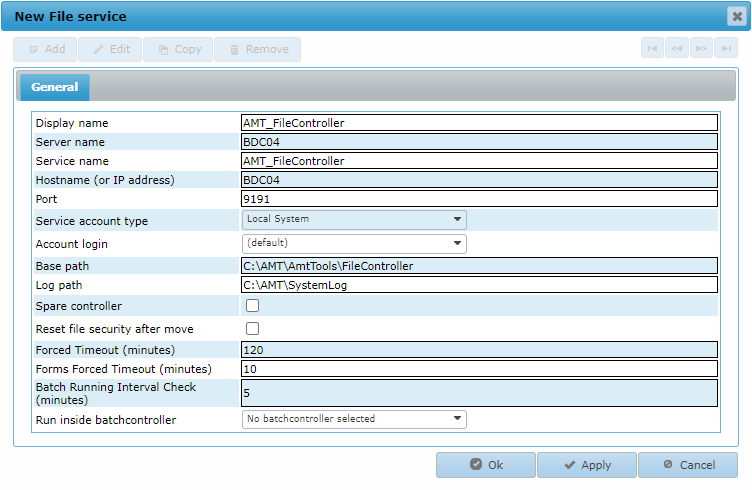
Configure the settings for the new service. The image below displays an
example of a configured File Controller service.
Select the Ok button to add the File controller and close the
window.
Select the newly added service from the list and then select
the (De)Install button.
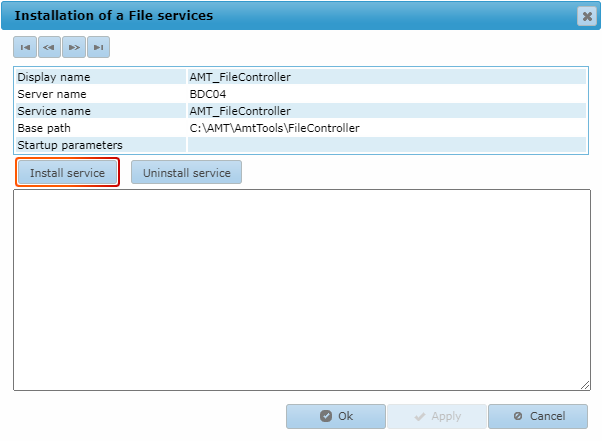
In the new window that opens select the Install service
button to install the File Controller as a Windows service.
Select the Ok button to close this window.
Only one File Controller and one Spare File Controller (for failover) can be installed in an AMT
environment.
A Reorganize Service is an optional service that performs database structure changes
to the system and application databases. Use this service in environments that are not authorized to connect to a
database, to instead run the reorganization of the database through a server.
Navigate in the Control Center to System Configuration →
Services and select the Reorganize services tab.
Select the Add button to add a new Reorganize service.
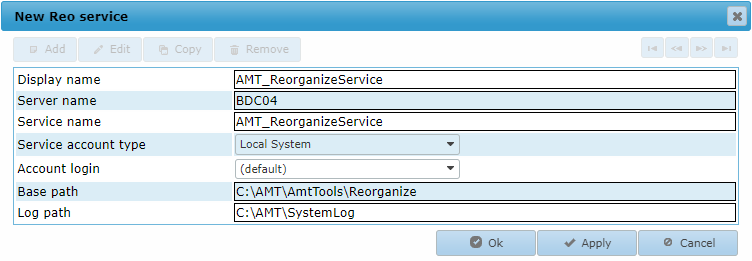
Configure the settings for the new service. The image below shows an example of a configured Reorganize
service.
Select the Ok button to add the Reorganize service and close the
window.
Select the newly added service from the list and then select the
(De)Install button.
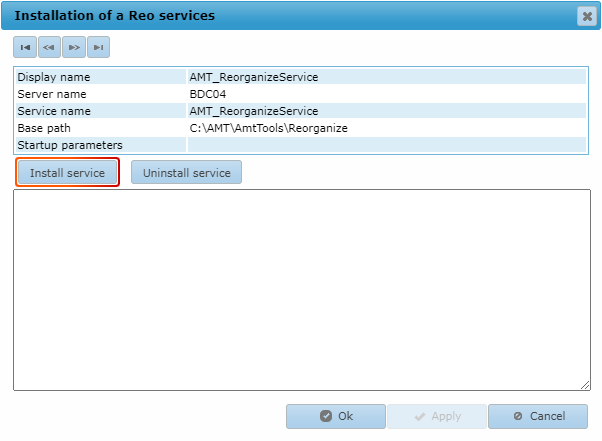
In the new window that opens select the Install service button to install the Reorganize
Service as a Windows service.
Select the Ok button to close this window.
Navigate to the following directory: <AMT Environment>\AmtTools\Reorganize.
Copy the Sample_appsettings.json file found in this directory and rename the
copied file to appsettings.json.
Open the file in a text editor and configure the following setting to contain a server and a port:
"ReoServiceAddress": "<Server>:<Port>",
The server should be set to the hostname of the machine where the Reorganize Service will be running, and the port should be set to a free port number for the service.
Example: "ReoServiceAddress": "BDC04:9196",
A Job Queue controls when and in what order jobs are executed. It is required to have at least one Job Queue to
execute jobs
Navigate in the Control Center to System Configuration → Batch & Forms and
select the JobQueues tab.
Select the Add button to add a new Job Queue.
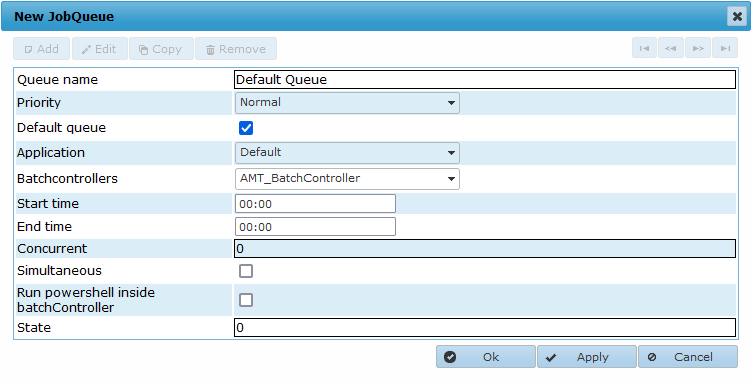
Configure the settings for the new queue. A free to choose name can be used for the Queue
name, but it is suggested to use the name "Default Queue" or "Default Job Queue". The image below
shows an example of a configured Default Job Queue.
Select the Ok button to add the Job Queue and close the window.
A Print Queue controls when and in what order prints are started. It is required to have at least one Print Queue to
print.
Navigate in the Control Center to System Configuration → Printers and select
the PrintQueues tab.
Select the Add button to add a new Default Print Queue.
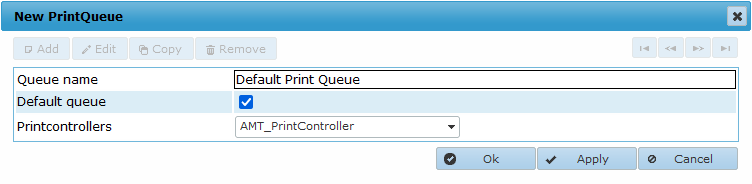
Configure the settings for the new queue. A free to choose name can be used for the Queue name,
but it is suggested to use the name "Default Queue" or "Default Print Queue" The image below shows an example of
a configured Default Print
Queue.
Select the Ok button to add the Default Print Queue and close the window.
After installing the Windows services as shown on this page, the services can be started as described in the steps
below:
Navigate in the Control Center to Applications → Server Control.
Start the services by selecting the System node and clicking on it with the right
mouse button, then select Start all servers.
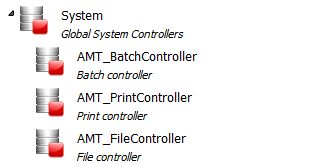
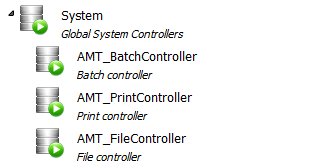
All services
should start, as indicated by the red squares turning into green circles with an arrow inside of it.
Note: As the Reorganize Service is an optional service, it won't start automatically but can be started manually by right clicking on its node.

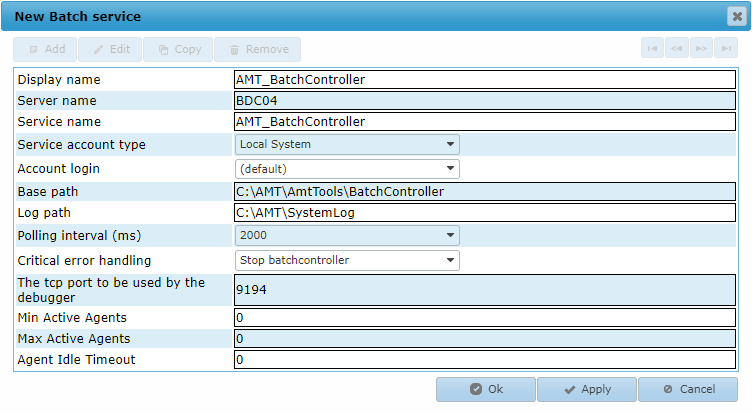
install.png)
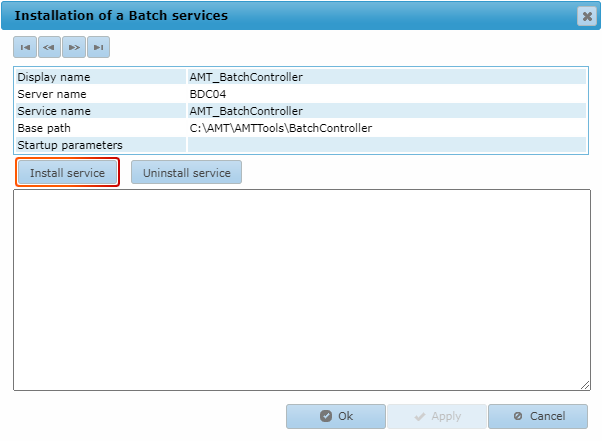
install.png)
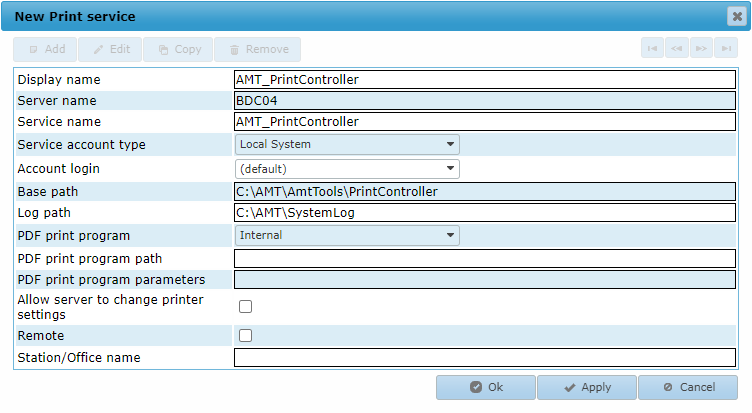
install.png)
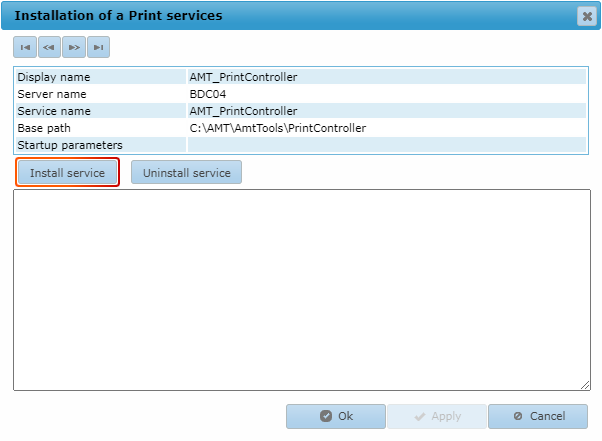
install.png)